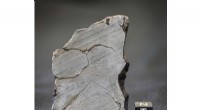
1. Sample Analysis: Apollo astronauts brought back lunar samples during the Apollo missions, and scientists have extensively studied these samples to understand the moon's composition, age, and geological history. By analyzing the mineralogical, chemical, and isotopic characteristics of lunar samples, scientists can determine their origin, formation time, and the processes that shaped them.
2. Remote Sensing: Spacecraft equipped with advanced instruments orbit the moon and collect data from a distance. Instruments such as cameras, spectrometers, and radar systems provide detailed observations of the lunar surface, allowing scientists to study its topography, composition, and surface features. By comparing images and data from different missions and time periods, scientists can track changes over time and infer past events.
3. Geologic Mapping: Detailed geologic maps of the moon are created based on remote sensing data and sample analysis. These maps depict different rock units and geologic features on the lunar surface, providing insights into the moon's geological history and evolution. By studying the distribution, composition, and ages of different geologic units, scientists can reconstruct past geological processes, such as volcanic eruptions, impacts, and tectonic activity.
4. Dating Techniques: Scientists use various radiometric dating techniques, such as potassium-argon (K-Ar) dating and uranium-lead (U-Pb) dating, to determine the ages of lunar rocks and minerals. By measuring the decay products of radioactive isotopes, they can calculate the time since the rock's formation or crystallization, helping to establish a timeline for lunar events.
5. Crater Analysis: The moon's surface is densely covered with impact craters, which serve as a record of past impact events. By studying the size, density, distribution, and morphology of craters, scientists can estimate their ages and infer the bombardment history of the moon. This information provides insights into the collisional history of the moon-Earth system and the evolution of the solar system.
6. Numerical Modeling: Scientists develop numerical models to simulate the formation and evolution of the moon. These models incorporate physical and chemical processes, such as gravitational interactions, heat transfer, and magma dynamics. By running computer simulations, scientists can test different hypotheses about the moon's origin and history, and compare model predictions with observed data.
By combining these techniques and analyzing various lines of evidence, scientists continue to refine their understanding of the moon's history, from its formation and early differentiation to the processes that shaped its surface and interior over billions of years.