Water's influence in this scenario is primarily related to the following aspects:
1) Volatile Depletion:
The giant impact is believed to have caused extensive heating and vaporization, resulting in the loss of volatile elements from both the Earth and Theia. Water, as a volatile substance, would have been significantly depleted during this process. Consequently, the Moon, which formed from the ejected material, is largely depleted in water compared to Earth.
2) Moon's Formation and Composition:
The presence of water during the Moon's formation could have influenced the composition and characteristics of the Moon. Some water vapor trapped in the Moon-forming disk could have condensed and contributed to the Moon's overall water budget. However, the water content of the Moon is still significantly lower compared to Earth, suggesting that most of the water was lost during the impact and subsequent heating processes.
3) Lunar Magmatism and Volcanism:
The Moon likely experienced extensive volcanism in its early history. Water, if present, could have played a role in facilitating magma formation and influencing the composition and properties of lunar volcanic rocks. Some lunar samples have revealed trace amounts of water, indicating that magmatic processes on the Moon may have involved water-bearing materials.
4) Polar Ice Deposits:
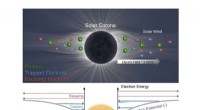
Recent observations have confirmed the presence of ice deposits in permanently shadowed craters near the Moon's poles. It is believed that these deposits could have originated from various sources, including water delivered by impacting comets and asteroids, water implanted by the solar wind, and water released from the Moon's interior through volcanic eruptions or other processes. Understanding these ice deposits provides crucial insights into the Moon's water history and the ongoing processes shaping its surface.
In essence, water's influence on the Moon's origin story has revised our understanding of the early stages of the Earth-Moon system. It highlights the complex interactions, volatile transport, and dynamic processes that shaped the characteristics and composition of the Moon. Ongoing lunar missions and scientific endeavors aim to further unravel the mysteries surrounding water on the Moon and its potential role in shaping its evolution and history.