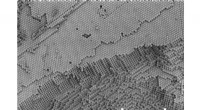
Conceptual diagram of carbon nanotubes
A paper in the journal Science and Technology of Advanced Materials explores what is preventing the reinforcing ability of carbon nanotubes from being used in a ceramic matrix.
Ever since their discovery, carbon nanotubes (CNTs) have been considered the ultimate additive to improve the mechanical properties of structural ceramics, such as aluminum oxide, silicon nitride and zirconium dioxide. Yet despite the remarkable strength and stiffness of CNTs, many studies have reported only marginal improvements or even the degradation of mechanical properties after these super-materials were added. Indeed, the ability of CNTs to directly reinforce a ceramic material has been strongly questioned and debated in the last ten years.
So what's going on? In a review paper published in the journal Science and Technology of Advanced Materials, researchers at the National Institute for Materials Science in Japan explore what is preventing the reinforcing ability of CNTs from being exploited in a ceramic matrix.
The researchers list three fundamental questions, which must be addressed in order to examine and understand the direct reinforcing ability and mechanism of CNTs in a ceramic matrix:
The authors briefly review recent studies addressing the above questions. In particular, they discuss a recently discovered reinforcing mechanism at the nanoscale, which is responsible for unprecedented, simultaneous mechanical improvements including strengthening, toughening and softening of the ceramic host matrix. They also highlight a new processing method that enables the fabrication of defect-free CNT-concentrated ceramics and CNT-graded composites with unprecedented properties, for applications ranging from biomedical implants and tissue engineering to thermoelectric power generation.