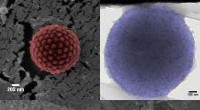
Intercalated nanocomposites are materials formed by inserting nanoscale layers of one material between the layers of another material. This process is called intercalation.
Here's a breakdown of the key components:
* Host Material: This is the base material with a layered structure, like clay minerals (e.g., montmorillonite), graphite, or layered double hydroxides (LDHs).
* Guest Material: This is the nanoscale material that gets inserted between the layers of the host. It can be a polymer, metal, oxide, or even another layered material.
How it works: The host material's layers have a specific spacing determined by its structure. When the guest material is introduced, it can diffuse into the spaces between the layers due to attractive forces or chemical reactions. This intercalation process changes the properties of the host material, often leading to:
Advantages of Intercalated Nanocomposites:
* Improved mechanical properties: Higher strength, stiffness, and toughness.
* Enhanced thermal stability: Increased melting point, reduced flammability.
* Enhanced barrier properties: Improved gas and liquid permeability.
* Improved electrical conductivity: Enhanced charge transport and electrical conductivity.
* Tailored optical properties: Altered transparency, reflectivity, and refractive index.
* Increased catalytic activity: Improved surface area and catalytic activity.
Examples of Intercalated Nanocomposites:
* Clay-polymer nanocomposites: Used in packaging, automotive parts, and construction materials.
* Graphene-polymer nanocomposites: Used in electronics, energy storage, and aerospace applications.
* Layered double hydroxide (LDH) nanocomposites: Used in catalysis, drug delivery, and fire retardants.
Challenges:
* Control of intercalation: Achieving uniform and consistent intercalation is crucial.
* Stability of the intercalated structure: Ensuring long-term stability of the intercalated structure is important.
* Processing: Developing efficient and scalable methods for producing intercalated nanocomposites is necessary.
Applications:
Intercalated nanocomposites have a wide range of applications in various fields, including:
* Materials Science: Polymer composites, coatings, and ceramics.
* Electronics: Batteries, sensors, and solar cells.
* Biotechnology: Drug delivery, bioimaging, and tissue engineering.
* Catalysis: Heterogeneous catalysis and environmental remediation.
Overall, intercalated nanocomposites are a promising class of materials that offer unique properties and diverse applications. They continue to be actively researched and developed for their potential to revolutionize various fields.