Here's why:
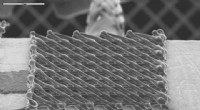
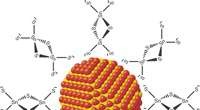
* Nanowhiskers are not inherently stain-repellent: Nanowhiskers are microscopic structures with high aspect ratios (length much greater than width). Their properties depend heavily on the material they are made of. Some nanowhiskers might be hydrophobic (water-repellent), but this is not a universal property.
* Existing technologies for stain repellency: There are established technologies for stain-resistant fabrics, such as:
* Fluorocarbons (Teflon): These create a hydrophobic surface that prevents liquids from penetrating the fabric.
* Nano-scale coatings: These can be applied to fabrics to create a smooth, non-porous surface that repels stains.
* Hydrophilic coatings: These attract water and repel oil-based stains.
* Challenges with nanowhiskers for stain repellency:
* Difficult to apply uniformly: Applying nanowhiskers onto fabric in a way that consistently provides stain resistance can be challenging.
* Stability and durability: The effectiveness of nanowhiskers in repelling stains might degrade over time due to wear and tear on the fabric.
* Potential health concerns: Some nanomaterials have raised concerns regarding their potential health effects.
In summary, while nanowhiskers have various interesting applications, they are not commonly used for stain repellency on fabrics. Established technologies provide more effective and practical solutions for this purpose.