* Redshift is a cosmological phenomenon: Redshift is primarily associated with the expansion of the universe, where light from distant objects stretches and shifts towards the red end of the electromagnetic spectrum. It's not a phenomenon directly observed within the typical scale of nanoparticle analysis.
* Nanoparticle analysis techniques: Scientists use various techniques to characterize nanoparticles, including:
* Dynamic Light Scattering (DLS): Measures particle size by analyzing the scattering of light.
* Transmission Electron Microscopy (TEM): Provides high-resolution images of nanoparticles.
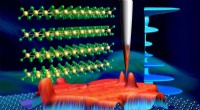
* Atomic Force Microscopy (AFM): Generates surface images of nanoparticles.
* X-ray Diffraction (XRD): Determines the crystal structure and size of nanoparticles.
* UV-Vis Spectroscopy: Analyzes the absorption and transmission of light by nanoparticles.
However, there are some indirect connections to redshift:
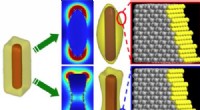
* Surface Plasmon Resonance (SPR): Some metal nanoparticles exhibit SPR, where electrons on the surface oscillate in resonance with specific wavelengths of light. This can lead to a shift in the absorption spectrum of the nanoparticle, which can be misinterpreted as a redshift. However, SPR is a distinct phenomenon from cosmological redshift.
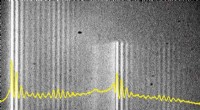
* Raman Spectroscopy: Raman spectroscopy can be used to analyze the vibrational modes of molecules on the surface of nanoparticles. A shift in the Raman spectrum could indicate changes in the local environment of the nanoparticle, which could be related to interactions with other molecules or materials. While not directly a redshift, this shift can be interpreted as a kind of spectral shift.
In conclusion: While redshift is a significant concept in astrophysics, it's not directly applied in nanoparticle determination. However, some analytical techniques like SPR and Raman spectroscopy can lead to spectral shifts that might be mistaken for redshift. Always remember to consider the context of your analysis and the specific technique being used.