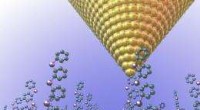
Nanoscience, with its ability to manipulate matter at the atomic and molecular level, holds immense potential for revolutionary advancements across various fields. Here are some potential future developments:
1. Advanced Materials:
* Self-healing materials: Materials that can repair themselves upon damage, extending their lifespan and reducing maintenance costs.
* Super-strong, lightweight materials: Nanomaterials with superior strength-to-weight ratios, enabling the creation of lighter, more durable structures for aerospace, automotive, and other industries.
* Flexible electronics: Nano-sized components can be used to create bendable, foldable, and even wearable electronics, revolutionizing how we interact with technology.
* Quantum materials: Harnessing quantum mechanics at the nanoscale could lead to materials with unprecedented properties, like superconductivity at room temperature or highly efficient energy storage.
2. Medicine and Healthcare:
* Targeted drug delivery: Nanocarriers can deliver drugs directly to specific cells or tissues, minimizing side effects and increasing effectiveness.
* Nanobots for diagnostics and therapy: Tiny robots could be used to diagnose diseases early, deliver targeted therapies, or even repair damaged cells.
* Biocompatible implants: Nanomaterials can be integrated with living tissues, creating biocompatible implants for prosthetics, drug delivery, and tissue regeneration.
* Personalized medicine: Nanoscience can enable tailored treatments based on an individual's genetic makeup, leading to more effective and targeted therapies.
3. Energy and Environment:
* Renewable energy generation: Nanomaterials can enhance solar cell efficiency, improve battery storage, and create more efficient energy harvesting devices.
* Water purification and remediation: Nanomaterials can be used to remove pollutants from water sources, improving water quality and ensuring sustainable water management.
* Climate change mitigation: Nanomaterials can contribute to carbon capture and sequestration, reducing greenhouse gas emissions and mitigating climate change.
4. Advanced Computing and Electronics:
* Quantum computing: Nanoscience is crucial for developing quantum computers, with potential applications in cryptography, drug discovery, and artificial intelligence.
* Faster and more efficient electronics: Nanomaterials can be used to create smaller, faster, and more energy-efficient transistors and other electronic components.
* Nano-scale sensors: Nanosensors can be used to detect minute changes in the environment, leading to improved monitoring and early detection of hazards.
5. Other Potential Developments:
* Nanomanufacturing: Nanotechnology can revolutionize manufacturing processes, leading to more efficient and sustainable production methods.
* Nanopesticides and fertilizers: Nanoscience can create more targeted and efficient agricultural inputs, improving crop yields and reducing environmental impact.
* Security and defense: Nanomaterials can be used to create advanced materials for protective armor, detection systems, and other military applications.
Challenges and Ethical Considerations:
While the potential of nanoscience is vast, several challenges and ethical considerations need to be addressed:
* Safety and toxicity: The long-term effects of nanomaterials on human health and the environment are still being studied.
* Environmental impact: The production and disposal of nanomaterials need to be sustainable and environmentally friendly.
* Ethical implications: The development and use of nanotechnology raise ethical questions related to privacy, security, and access to these technologies.
Despite these challenges, nanoscience holds tremendous potential for positive change. With continued research and development, it has the potential to address some of the world's most pressing challenges and improve life for all.
It is important to continue ethical and responsible research, addressing potential risks and ensuring that the benefits of nanotechnology reach all of humanity.