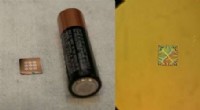
The targets used in early alpha particle atomic experiments were often thin foils of various materials, such as gold, silver, copper, aluminum, and zinc. These foils were used to study the scattering of alpha particles, which provided insight into the structure of atoms and the nature of the atomic nucleus. By analyzing the deflection of alpha particles as they passed through the target foils, scientists were able to gain information about the size and charge of the nucleus, as well as the distribution of electrons within the atom.