Richard Feynman's Vision: In his famous 1959 lecture titled "There's Plenty of Room at the Bottom," physicist Richard Feynman envisioned the possibility of manipulating atoms and molecules to create new materials and devices. This talk is often considered the birth of nanotechnology.
Eric Drexler's Nanosystems: In the 1970s, American engineer Eric Drexler further developed the concept of nanotechnology in his book "Engines of Creation." He proposed the idea of molecular manufacturing, where machines could build structures atom by atom.
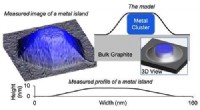
Scanning Tunneling Microscope: In 1981, Swiss physicists Gerd Binnig and Heinrich Rohrer invented the scanning tunneling microscope (STM). This instrument allowed scientists to visualize and manipulate individual atoms and molecules, opening up new possibilities for nanoscale research.
Atomic Force Microscope: Another key invention was the atomic force microscope (AFM), developed in 1986 by Gerd Binnig, Christoph Gerber, and Calvin Quate. The AFM enabled scientists to measure the forces between atoms and manipulate matter on the nanoscale.
Drexler's Foresight Institute: In 1988, Eric Drexler established the Foresight Institute, a nonprofit organization dedicated to advancing nanotechnology and responsible use of nanotechnologies.
National Nanotechnology Initiative (NNI): In the United States, the National Nanotechnology Initiative was launched in 2000 with the goal of coordinating federal research efforts in nanotechnology. The NNI has played a significant role in funding nanotechnology research and promoting its applications in various fields.
Self-Assembly: Scientists made progress in understanding self-assembly, where atoms and molecules can organize themselves into complex structures without external manipulation. This discovery has been important for developing nanoscale materials.
Carbon Nanotubes: Sumio Iijima's discovery of carbon nanotubes in 1991 marked a breakthrough in nanomaterial research. Carbon nanotubes have unique properties, making them promising candidates for various applications, including electronics, energy, and medicine.
Graphene: In 2004, researchers at the University of Manchester isolated graphene, a single-atom-thick layer of carbon. Graphene exhibits exceptional electrical and thermal properties and holds great potential for future technologies.
Advancements in Fabrication Techniques: Over the years, various fabrication techniques have been developed and refined for creating nanostructures and devices. These techniques include lithography, chemical synthesis, and self-assembly.
Commercial Applications: In recent years, nanotechnology has begun to find its way into commercial applications, such as nano-enabled materials, coatings, electronics, and medical devices. However, the full potential of nanotechnology is yet to be realized.
Today, nanotechnology continues to be a rapidly growing field of research and development, with numerous research groups, universities, and industries actively involved in advancing the technology and exploring its diverse applications.