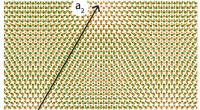
Strong Carbon-Carbon Bonds: Graphene consists of a single layer of carbon atoms arranged in a hexagonal lattice. The carbon-carbon bonds in graphene are covalent, meaning they involve the sharing of electrons between carbon atoms. This covalent bonding gives graphene its remarkable strength and rigidity. The carbon-carbon bond length in graphene is approximately 0.142 nanometers, which is shorter than the typical carbon-carbon bond length of 0.154 nanometers. This shorter bond length results in stronger bonds between carbon atoms and increased overall strength.
Two-Dimensional Structure: The two-dimensional nature of graphene contributes to its strength. Unlike three-dimensional materials, where forces can be distributed in multiple directions, graphene's forces are concentrated within its two-dimensional plane. This planar structure allows graphene to withstand significant mechanical stress without breaking.
High Elastic Modulus: The elastic modulus of a material represents its resistance to deformation under applied stress. Graphene has one of the highest elastic moduli among all known materials. It has been measured to be approximately 1 terapascal (TPa), which means that it can withstand a force of 1 trillion pascals without undergoing permanent deformation. This exceptional stiffness makes graphene highly resistant to stretching and bending.
Absence of Defects: Defects, such as vacancies, impurities, and grain boundaries, can weaken materials by disrupting their regular atomic structure. However, graphene can be produced with a remarkably low defect density. The absence of defects allows graphene to maintain its intrinsic strength and prevents crack propagation, further enhancing its mechanical robustness.
In summary, graphene's strength arises from its strong carbon-carbon covalent bonds, two-dimensional structure, high elastic modulus, and low defect density. These factors combine to make graphene one of the strongest materials known, with potential applications in various fields, including electronics, composites, nanotechnology, and aerospace engineering.