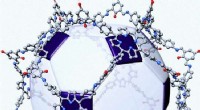
The team, led by researchers from the University of California, Berkeley, and the Paul Scherrer Institute, discovered this intriguing phenomenon while studying a class of molecules known as calixarenes. Calixarenes are cup-shaped molecules that can arrange themselves into various structures when mixed in solution.
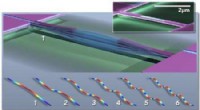
Using a combination of experimental techniques and theoretical modeling, the researchers found that under specific conditions, calixarenes self-assemble into five distinct layers or "slices" of nanometer-sized material. The resulting structures resemble slices of pie, with each layer having a uniform thickness and curvature.
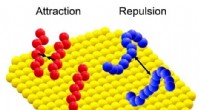
The researchers attribute this spontaneous self-assembly to the balance between attractive and repulsive forces between the calixarene molecules. The flat, aromatic rings of the molecules stack together to form the layers, while the charged groups at the molecule's edges repel each other, creating the spaces between the layers.
The ability of molecules to self-organize into complex structures without external intervention has significant implications for fields such as materials science, nanotechnology, and supramolecular chemistry. Understanding the fundamental principles governing these self-assembly processes could lead to new methods for designing functional materials and nanoscale devices.
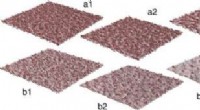
Beyond the scientific implications, the researchers were also struck by the aesthetic beauty of the self-assembled structures. The uniform, slice-like arrangement of the molecules created patterns that resemble abstract art or even landscapes viewed from above.
The discovery of these self-assembling calixarene structures adds to our knowledge of the intricate dance molecules perform at the nanoscale, shaping the world around us in unexpected and mesmerizing ways.