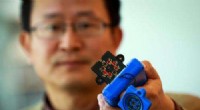
Lab-on-a-chip (LOC) technology is a rapidly growing field that has the potential to revolutionize the way we perform laboratory experiments. LOC devices are small, portable, and inexpensive, making them ideal for use in a variety of settings, including point-of-care diagnostics, environmental monitoring, and drug discovery.
Polymers are a promising material for LOC devices due to their unique properties. They are lightweight, flexible, and can be easily molded into complex shapes. They are also resistant to chemicals and solvents, making them ideal for use in biological applications.
One of the most important advantages of polymers for LOC devices is their ability to be functionalized. This means that polymers can be modified to have specific chemical or biological properties. This allows researchers to create LOC devices that are specifically designed for a particular application.
For example, polymers can be functionalized to bind to specific proteins or DNA sequences. This can be used to create LOC devices that can perform complex assays, such as immunoassays or gene expression assays.
Polymers can also be functionalized to create microfluidic channels. Microfluidic channels are tiny channels that can be used to transport fluids and cells. This allows researchers to create LOC devices that can perform a variety of fluidic operations, such as mixing, separation, and detection.
The combination of their unique properties and their ability to be functionalized makes polymers a promising material for LOC devices. LOC devices based on polymers have the potential to revolutionize the way we perform laboratory experiments and make them more accessible to a wider range of users.
Here are some specific examples of how polymers are used in LOC devices:
* Polydimethylsiloxane (PDMS) is a silicone-based polymer that is commonly used in LOC devices. PDMS is flexible, transparent, and biocompatible, making it ideal for use in microfluidic applications.
* Polycarbonate is a thermoplastic polymer that is often used in LOC devices for its strength and durability. Polycarbonate can be used to create LOC devices that can withstand high pressures and temperatures.
* Polyethylene terephthalate (PET) is a polyester polymer that is commonly used in LOC devices for its flexibility and low cost. PET can be used to create LOC devices that are disposable and easy to manufacture.
These are just a few examples of the many polymers that are used in LOC devices. As the field of LOC technology continues to grow, new polymers with improved properties are being developed all the time. This will allow researchers to create even more powerful and versatile LOC devices that can be used for a wider range of applications.