*In vitro* and animal studies demonstrate the potential of a new drug delivery system to effectively target and destroy ovarian cancer cells.
Researchers at The University of Texas at Dallas have developed a new type of nanoparticle that can selectively target and kill ovarian cancer cells with minimal toxicity to healthy cells. The findings are published in the journal _ACS Nano_.
Ovarian cancer is the fifth leading cause of cancer death among women in the United States. The disease is often difficult to detect in its early stages, and treatment options are limited.
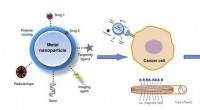
The new nanoparticles are made of a biodegradable polymer that is coated with a pH-sensitive molecule. This molecule allows the nanoparticles to pass through the bloodstream and accumulate in the acidic environment of ovarian tumors. Once inside the tumors, the nanoparticles release a chemotherapy drug that kills the cancer cells.
In _in vitro_ and animal studies, the nanoparticles were found to be effective at killing ovarian cancer cells while sparing healthy cells. The nanoparticles also showed no signs of toxicity in healthy animals.
The researchers say that the nanoparticles have the potential to be a new treatment option for ovarian cancer patients. The nanoparticles could be used in combination with other therapies to improve the overall survival of patients.
"This study demonstrates the potential of acid-sensitive nanoparticles as a novel therapeutic approach for ovarian cancer," said Dr. Zhen Gu, corresponding author of the study and professor of bioengineering at UT Dallas. "The nanoparticles were able to effectively target and kill ovarian cancer cells while avoiding healthy cells. This is a significant step forward in the development of new treatments for ovarian cancer."
The researchers plan to conduct further studies to evaluate the safety and efficacy of the nanoparticles in humans.