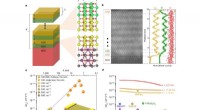
Polarization is a property of light that describes the orientation of its electric field. In most materials, the polarization of light does not change as it propagates. However, the researchers found that in certain materials, the polarization of light can change dramatically at the nanoscale.
This finding could have implications for the development of new optical devices. For example, it could be used to create lasers that emit light with a specific polarization. This could be useful for applications such as optical communications and medical imaging.
The researchers say that they are currently working to understand the fundamental physics behind this phenomenon. They hope that their research will lead to the development of new optical devices that can exploit this effect.
The study was published in the journal Nature Photonics.