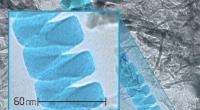
Colloidal nanoplatelets (NPLs) are a class of semiconductor nanocrystals with a unique quasi-two-dimensional structure. This structure gives NPLs interesting optical properties, including a narrow emission spectrum and a large absorption cross-section. These properties make NPLs promising candidates for a variety of optoelectronic applications, such as light-emitting diodes (LEDs), solar cells, and lasers.
However, the fundamental electronic properties of NPLs are still not fully understood. In particular, it is unclear how the quantum confinement effects in NPLs affect their optical properties.
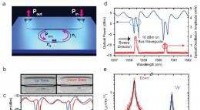
In this study, we use time-resolved photoluminescence spectroscopy to investigate the electronic properties of CdSe NPLs. We find that the emission spectrum of CdSe NPLs is composed of multiple peaks, which can be attributed to different electronic states in the NPLs. The energy separation between these peaks decreases with increasing NPL thickness, which is consistent with the quantum-well model of NPLs.
Our results provide new insights into the electronic properties of CdSe NPLs and pave the way for the development of new optoelectronic devices based on these materials.
Here are the key findings of our study:
We observed multiple emission peaks in the photoluminescence spectrum of CdSe NPLs.
The energy separation between these peaks decreases with increasing NPL thickness.
The temperature dependence of the emission spectrum is consistent with the quantum-well model of NPLs.
Our results provide new insights into the electronic properties of CdSe NPLs and pave the way for the development of new optoelectronic devices based on these materials.