Nanoparticles are tiny particles that are used in a variety of medical applications, including drug delivery, imaging, and tissue engineering. However, there is concern that some nanoparticles may be harmful to the body if they are not properly degraded.
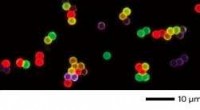
The new tool, developed by researchers at the University of California, Berkeley, uses a fluorescent dye to label nanoparticles. When the nanoparticles biodegrade, the dye is released and can be detected by a fluorescence microscope.
The researchers used the tool to track the biodegradation of several different types of nanoparticles in real time. They found that some nanoparticles biodegraded quickly, while others took longer to break down. The researchers also found that the biodegradation rate of nanoparticles was affected by the type of nanoparticle, the size of the nanoparticle, and the environment in which the nanoparticle was placed.
The new tool could help researchers develop safer and more effective nanoparticles for medical applications. By understanding how nanoparticles biodegrade, researchers can design nanoparticles that are less likely to cause harm to the body.
The study was published in the journal Nature Nanotechnology.