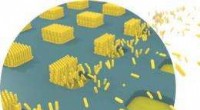
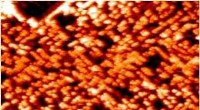
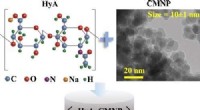
The nanocrystals are derived from cellulose, the main component of plant cell walls. They are only about 10 nanometers in size, or about 1/1000th the width of a human hair.
When the nanocrystals are added to concrete, they act as a filler material that helps to strengthen the bond between the cement and the aggregate (the sand, gravel, or crushed stone that makes up the bulk of concrete). This results in a concrete that is stronger and more resistant to cracking and other damage.
The researchers tested the strength of the nanocrystalline concrete by adding different amounts of nanocrystals to concrete samples and then testing them to see how much weight they could support before breaking. They found that the concrete with 2% nanocrystals was 20% stronger than the regular concrete.
In addition to making concrete stronger, the researchers also found that the nanocrystals can make it more durable. Concrete is susceptible to damage from water and salt, which can cause the cement to break down. The nanocrystals help to protect the concrete from these damaging effects by forming a barrier that prevents water and salt from penetrating the material.
The researchers say that the addition of nanocrystalline cellulose to concrete could lead to a new generation of stronger, more durable concrete that could be used in a variety of applications, including bridges, buildings, and roads.
The study was published in the journal Cement and Concrete Research.