The steps involved in producing fluorescent nanoparticles for medical applications in a nuclear reactor are as follows:
1. Select a suitable material for the nanoparticles. The material should be biocompatible and have a high neutron capture cross-section. Some common materials used for this purpose include gadolinium, europium, and terbium.
2. Prepare the nanoparticles. The nanoparticles can be prepared by a variety of methods, such as chemical precipitation, sol-gel synthesis, or hydrothermal synthesis.
3. Irradiate the nanoparticles with neutrons. The nanoparticles are irradiated with neutrons in a nuclear reactor. This process can be performed in a variety of ways, such as using a beam of neutrons from a research reactor or using a sealed neutron source.
4. Purify the nanoparticles. After irradiation, the nanoparticles are purified to remove any radioactive impurities. This can be done by a variety of methods, such as filtration, centrifugation, or dialysis.
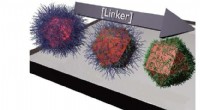
5. Functionalize the nanoparticles. The nanoparticles can be functionalized with targeting ligands or other molecules to improve their biocompatibility and targeting capabilities. This can be done by a variety of methods, such as covalent bonding, electrostatic interactions, or hydrophobic interactions.
The resulting fluorescent nanoparticles can then be used for a variety of medical applications, such as:
* Bioimaging: Fluorescent nanoparticles can be used to image tissues and organs in the body. This can be done by injecting the nanoparticles into the bloodstream or by applying them directly to the tissue of interest.
* Drug delivery: Fluorescent nanoparticles can be used to deliver drugs to specific cells or tissues in the body. This can be done by attaching the drugs to the nanoparticles or by encapsulating them within the nanoparticles.
* Photodynamic therapy: Fluorescent nanoparticles can be used to generate singlet oxygen, which can be used to kill cancer cells. This can be done by irradiating the nanoparticles with light of a specific wavelength.
Fluorescent nanoparticles have a wide range of potential applications in medical imaging, drug delivery, and photodynamic therapy. Their unique properties make them well-suited for these applications, and they are currently being investigated in a variety of clinical trials.