Butterflies are known for their beautiful wings, which are covered in tiny scales. These scales are made of a material called chitin, which is also found in the shells of beetles and other insects. Chitin is a very strong material, but it is also very flexible. This allows the butterfly wings to flutter in the wind without being damaged.
In addition to being strong and flexible, chitin is also transparent. This means that the butterfly wings can reflect light in all directions. This is what gives butterfly wings their iridescent appearance.
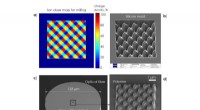
The iridescence of butterfly wings is caused by the way the light interacts with the nano-scale structures on the wing scales. These structures are so small that they can only be seen with an electron microscope.
Recent advances in electron microscopy have made it possible to image the nano-scale structures on butterfly wing scales in unprecedented detail. These images have revealed that the structures are very complex and regular. They are also very similar to the structures that are found in other natural materials, such as seashells and spider webs.
The study of the nano-scale structures on butterfly wing scales is a rapidly growing field. Scientists are learning more and more about how these structures form and how they contribute to the beauty and functionality of butterfly wings. This knowledge could have potential applications in the development of new materials and technologies.
Here are some of the key findings from recent studies of the nano-scale structures on butterfly wing scales:
* The structures are very complex and regular. They are made up of a repeating pattern of tiny bumps and ridges.
* The bumps and ridges are made of chitin, which is a very strong and flexible material.
* The structures are responsible for the iridescence of butterfly wings. They reflect light in all directions, giving the wings their beautiful rainbow-like appearance.
* The structures are very similar to the structures that are found in other natural materials, such as seashells and spider webs.
* The study of the nano-scale structures on butterfly wing scales is a rapidly growing field. Scientists are learning more and more about how these structures form and how they contribute to the beauty and functionality of butterfly wings. This knowledge could have potential applications in the development of new materials and technologies.