1. Stellar Wind:
- Young protostars initially have strong winds that outflow from their surfaces. These winds can carry away angular momentum from the star and surrounding gas.
2. Magnetic Fields:
- Magnetic fields play a crucial role in transferring angular momentum from the star to the surrounding gas. As the stellar wind interacts with these magnetic fields, it drags them outward, carrying angular momentum with it.
3. Magnetocentrifugal Effect:
- The combined effect of stellar winds and magnetic fields gives rise to the magnetocentrifugal effect. This process leads to the acceleration and ejection of gas along magnetic field lines. The ejected gas carries away angular momentum, causing the remaining gas and disk to spin up.
4. Gravitational Collapse:
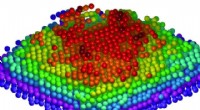
- As the gas loses angular momentum, it starts to fall back towards the protostar due to gravitational attraction. This collapse leads to the formation of a flattened, rotating disk around the protostar.
5. Disk Accretion:
- The infalling gas continues to feed the disk, adding mass and angular momentum. The disk gradually grows in size and becomes more massive, further enhancing its rotation.
6. Turbulent Mixing:
- Turbulence within the disk also contributes to the transfer of angular momentum. Turbulent motions can redistribute angular momentum, leading to a more uniform rotation of the disk.
7. Gravitational Instabilities:
- As the disk grows and cools, gravitational instabilities can develop within it. These instabilities cause the disk to fragment into clumps, which can eventually form into planets through further gravitational collapse and accretion.
It's important to note that the process of spinning up a disk around protostars is complex and influenced by various physical mechanisms. Stellar evolution, mass inflow rates, magnetic field configurations, and environmental factors can all affect the disk's rotation. However, the general principles described above provide a framework for understanding how disks are formed and spun up around young protostars.