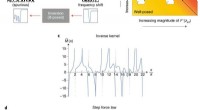
The study, published in the journal Nature Communications, involved an analysis of air pollution data spanning the past two decades from various sites in the U.S. and Europe. The researchers observed a consistent trend: as particle pollution levels decreased, typically due to air quality regulations, ozone levels surged during daytime hours with ample sunshine.
This effect was attributed to the role of particles in scattering solar radiation, particularly in the ultraviolet spectrum. With fewer particles present, more solar radiation reaches the Earth's surface and triggers a series of chemical reactions involving nitrogen oxides (NOx) and volatile organic compounds (VOCs) emitted by vehicles, power plants and other sources. These reactions produce ozone and other harmful air pollutants that constitute photochemical smog.
The researchers emphasize the importance of considering particle pollution reduction strategies within the broader context of regional and local air pollution control efforts. While curbing particle emissions is crucial for public health, it also means understanding how these measures might inadvertently affect ozone levels, especially in regions already challenged by ozone pollution.
Lead author Junrong Liu, a postdoctoral researcher at UCI's Department of Earth System Science, said: "Our study highlights the critical need for comprehensive air quality management that considers interactions among different pollutants and meteorological conditions. It's not enough to simply reduce particle pollution; we must develop coordinated strategies that take into account the complex interplay of pollutants to prevent unintended consequences and effectively combat photochemical smog."
The team intends to further investigate this phenomenon using computer modeling and field observations, with the goal of informing effective air pollution control policies and safeguarding public health.