1. Silk Production Begins in the Glands:
- Within the spider's abdomen reside specialized silk glands.
- These silk glands contain sericin proteins dissolved in water.
- The sericin proteins act as the building blocks for the silk fibers.
2. Formation of Silk Fibroin:
- The liquid silk solution undergoes modification as it passes through the spinneret, a finger-like structure located at the tip of the spider's abdomen.
- The spinneret houses numerous microscopic spigots.
- As the silk solution passes through the spigots, it comes in contact with oxygen, which triggers the conversion of sericin proteins into silk fibroin, an insoluble protein.
- This molecular rearrangement forms the core structure of the silk fibers.
3. Assembly and Alignment:
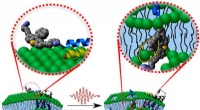
- As the silk fibroin molecules form, they self-assemble into liquid crystalline nanostructures, where the molecules align in a parallel fashion.
- This precise arrangement contributes to silk's superior mechanical properties.
4. Removal of Water:
- The aligned silk fibroin molecules are extruded through the spigots and drawn into a fiber by the spider.
- During the drawing process, the water content in the silk is rapidly reduced through evaporation.
- This dehydration further enhances the fiber's strength and stiffness.
5. Curing and Cross-linking:
- Once the silk fiber is in place, it undergoes curing, allowing it to reach its final strength and stability.
- This curing process involves cross-linking between the silk fibroin molecules, forming covalent bonds that hold the fiber together.
6. Silk Architecture:
- Spiders can produce different types of silk with distinct properties depending on the function they serve (e.g., dragline, capture web, cocoon, etc.).
- The variation in silk properties arises from the composition of silk proteins and the structure of the spun fibers.
The remarkable ability of spiders to spin self-assembled silk has inspired researchers to explore ways to harness this natural material for various engineering and biomedical applications. Understanding the processes behind silk spinning has contributed to advancements in biomimicry and the development of synthetic materials with similar properties to spider silk.