The intricate design and durability of seashells and coral have captivated scientists for centuries. These structures, composed primarily of calcium carbonate, are marvels of biomineralization, a complex process by which living organisms form mineralized tissues. Recent nanoscale investigations are providing a deeper understanding of the underlying mechanisms behind biomineralization, revealing a sophisticated interplay between organic molecules, ions, and the physical environment.
Nanoscale Architecture of Shells and Coral
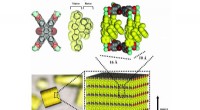
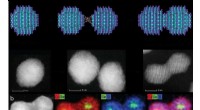
By employing advanced microscopy techniques, such as transmission electron microscopy (TEM) and atomic force microscopy (AFM), scientists can probe the nanoscale architecture of shells and coral. These analyses unveil the intricate arrangement of organic and inorganic components, with intricate patterns and hierarchical structures emerging at the nanoscale. For instance, in nacre, the iridescent material lining the inner surfaces of mollusk shells, TEM images reveal the presence of alternating layers of calcium carbonate platelets and organic matrix. These layers, arranged in a 'brick-and-mortar' architecture, contribute to the exceptional strength and toughness of nacre.
Roles of Organic Molecules
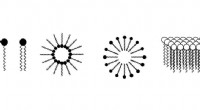
Nanoscale investigations have highlighted the crucial role of organic molecules in biomineralization. These organic components, which include proteins, carbohydrates, and lipids, act as templates, regulate mineral growth, and stabilize the mineral phases. Proteins, in particular, play a significant role in controlling the nucleation and growth of calcium carbonate crystals, dictating the size, shape, and orientation of the mineral deposits. They act as molecular 'masons,' guiding the assembly process with high precision.
Influence of Environmental Factors
The nanoscale examination of shells and coral also demonstrates the influence of environmental factors on biomineralization. For example, studies reveal how changes in temperature, pH, and ion concentrations can alter the mineral phase formation, leading to variations in the composition and structure of the biomineralized tissues. These findings emphasize the dynamic nature of biomineralization, which is influenced by both genetic factors and the surrounding environment.
Implications for Materials Science and Engineering
The nanoscale insights gained from studying shells and coral have significant implications for materials science and engineering. By mimicking the intricate biomineralization processes observed in nature, researchers aim to develop advanced composite materials with enhanced strength, durability, and functionality. These bio-inspired materials could find applications in various industries, including construction, aerospace, and biomedical engineering.
Conclusion
Nanoscale investigations into the biomineralization of shells and coral have unveiled the intricate complexity and sophistication of these natural processes. The insights gained from these studies not only deepen our understanding of how marine organisms construct their protective structures but also provide inspiration for the development of novel materials with potential applications in diverse fields. As researchers continue to explore the nanoscale realm of biomineralization, we can anticipate even more breakthroughs and innovations in the future.