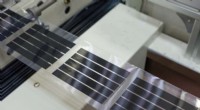
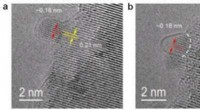
Substrate Preparation:
1. Clean the substrate (typically fluorine-doped tin oxide (FTO) coated glass) by sonication in acetone, followed by isopropanol, and then dry it with nitrogen.
Perovskite Precursor Solution Preparation:
2. Prepare the perovskite precursor solution by dissolving the organic and inorganic components in a suitable solvent. Common organic components include methylammonium iodide (MAI) and formamidinium iodide (FAI), while the inorganic component is usually lead iodide (PbI2). Common solvents include dimethylformamide (DMF), dimethylsulfoxide (DMSO), or mixtures thereof.
Note: The specific composition and ratios of the precursors may vary depending on the desired perovskite composition.
Film Deposition:
3. Deposit the perovskite precursor solution onto the prepared substrate using a suitable technique such as spin coating or doctor blading.
4. During spin coating, spin the substrate at a high speed (typically around 1000-6000 rpm) to spread the solution uniformly and remove excess solvent. This helps in controlling the film thickness and morphology.
5. For doctor blading, use a sharp blade to spread the precursor solution over the substrate. The thickness of the film can be controlled by adjusting the blade gap and the solution viscosity.
Annealing:
6. After deposition, anneal the perovskite film at an appropriate temperature (typically between 100-200°C) for a controlled duration (usually several minutes to tens of minutes). This annealing step is crucial for crystal growth and phase formation.
7. The annealing conditions should be optimized to ensure complete conversion of the precursor materials into the desired perovskite phase while avoiding decomposition or phase segregation.
Additional Steps:
8. Depending on the specific perovskite composition and device architecture, additional steps such as surface passivation, charge transport layer deposition, and electrode formation may be required to complete the fabrication of the perovskite solar cell.
By following this general procedure and optimizing the various parameters involved, it is possible to obtain highly crystalline organic-inorganic perovskite films with the desired crystal structure, morphology, and optoelectronic properties, leading to efficient and stable perovskite solar cells.