1. Plasmonic Nanostructures:
- Plasmonic nanoparticles, such as metallic nanoparticles or nanorods, can support localized surface plasmon resonances (LSPRs) that can confine and enhance light at specific frequencies. By precisely designing the size, shape, and arrangement of these nanostructures, it is possible to manipulate light over a wide range of frequencies, from visible to infrared.
2. Metasurfaces:
- Metasurfaces are ultrathin engineered surfaces composed of subwavelength meta-atoms or resonators. Metasurfaces can control the amplitude, phase, and polarization of light at specific frequencies and angles of incidence. They can be designed to manipulate light over a wide frequency range by incorporating different types of meta-atoms or resonators.
3. Photonic Crystals:
- Photonic crystals are periodic structures made of materials with different refractive indices. They can exhibit photonic bandgaps, which are ranges of frequencies where light propagation is forbidden. By controlling the periodicity and material properties of the photonic crystals, it is possible to tailor the bandgaps and thus manipulate light over specific frequency ranges.
4. Frequency-Selective Surfaces (FSS):
- FSS are periodic structures that selectively reflect or transmit light at specific frequencies while allowing other frequencies to pass through. By carefully designing the geometry and spacing of the FSS elements, it is possible to achieve frequency-dependent filtering and manipulation of light over a wide range of frequencies.
5. Nanostructured Materials:
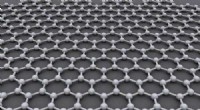
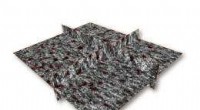
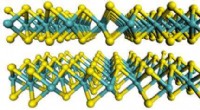
- Nanostructured materials, such as semiconductor quantum wells, quantum dots, and graphene, can exhibit unique optical properties that enable light manipulation at the nanoscale. These materials can be engineered to control the absorption, reflection, and transmission of light over a wide frequency range.
6. Nonlinear Optics:
- Nonlinear optical processes, such as second-harmonic generation, parametric amplification, and sum-frequency generation, can be utilized to manipulate light at different frequencies. By exploiting the nonlinear properties of certain materials, it is possible to convert light from one frequency to another, expanding the range of frequencies that can be manipulated.
These approaches enable precise control and manipulation of light on the nanoscale over wide frequency ranges, finding applications in nanophotonic devices, optical communication, sensing, imaging, and spectroscopy.