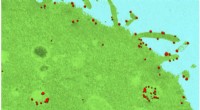
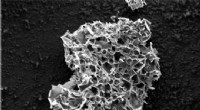
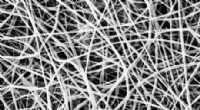
The first step to focusing on the tiniest of the very small is to choose the right microscope. There are many different types of microscopes available, each with its own advantages and disadvantages. For the best results, you'll need to choose a microscope that is specifically designed for the type of specimen you're trying to view.
2. Prepare your specimen.
Before you can focus on your specimen, you need to prepare it properly. This may involve slicing it into thin sections, staining it with a dye, or mounting it on a slide. The proper preparation will ensure that your specimen is visible under the microscope.
3. Use the correct lighting.
The type of lighting you use will also affect your ability to focus on your specimen. Brightfield microscopy, which is the most common type of microscopy, uses transmitted light to illuminate the specimen. Darkfield microscopy, on the other hand, uses reflected light to create a dark background against which the specimen can be seen. The best lighting for your specimen will depend on its structure and the type of microscope you're using.
4. Adjust the focus.
Once you've chosen the right microscope, prepared your specimen, and selected the correct lighting, you can begin to focus on your specimen. Most microscopes have a coarse focus knob and a fine focus knob. The coarse focus knob is used to move the stage up and down quickly, while the fine focus knob is used to make small adjustments to the focus.
5. Use the iris diaphragm.
The iris diaphragm is a small, circular opening located at the bottom of the microscope. By adjusting the size of the iris diaphragm, you can control the amount of light that reaches the specimen. A small iris diaphragm opening will produce a bright, focused image, while a large iris diaphragm opening will produce a dimmer, less focused image.
6. Use magnification.
Microscopes can magnify specimens by up to thousands of times. The higher the magnification, the smaller the specimen will appear. However, you should only use the magnification that is necessary to see the details you're interested in. Using too much magnification can make the image blurry and difficult to focus.
7. Be patient.
Focusing on the tiniest of the very small takes time and practice. Don't get discouraged if you can't get it right away. Just keep practicing and you'll eventually be able to see the world in a whole new way.