Lipid membranes are composed of a phospholipid bilayer, which is a double layer of phospholipids. Phospholipids are amphipathic molecules, meaning they have both hydrophilic (water-loving) and hydrophobic (water-hating) regions. The hydrophilic head groups of phospholipids face the aqueous environment on either side of the membrane, while the hydrophobic fatty acid tails face each other in the center of the membrane.
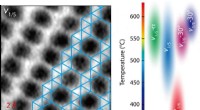
The phase behavior of lipid membranes is determined by the temperature and the composition of the membrane. At low temperatures, lipid membranes are in a solid-ordered (So) phase, in which the fatty acid tails are tightly packed together. As the temperature increases, the fatty acid tails become more disordered and the membrane transitions to a liquid-disordered (Ld) phase.
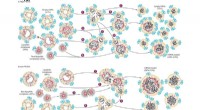
Charged nanoparticles can affect the phase behavior of lipid membranes by interacting with the charged head groups of phospholipids. This interaction can induce a transition from a Ld to a So phase, even at low temperatures. This is because the charged nanoparticles can neutralize the electrostatic repulsion between the charged head groups of phospholipids, allowing the fatty acid tails to pack more tightly together.
The ability of charged nanoparticles to induce a Ld to So phase transition in lipid membranes has important implications for the design of drug delivery systems. Nanoparticles can be used to deliver drugs across lipid membranes, and the phase behavior of the membrane can affect the efficiency of drug delivery. By controlling the charge of nanoparticles, it is possible to design drug delivery systems that are more effective at delivering drugs across lipid membranes.