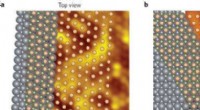
The research team, led by Professor Peidong Yang at the University of California, Berkeley, published their findings in the journal Nature Nanotechnology. They describe how they used a chemical vapor deposition process to grow GaN nanocrystals on a silicon substrate. The nanocrystals were then coated with a layer of aluminum nitride (AlN), which helped to improve their light-emitting properties.
The researchers found that the GaN/AlN nanocrystals emitted light at a wavelength of around 450 nanometers, which is in the blue region of the visible spectrum. This makes them promising candidates for use in blue LEDs and lasers. The nanocrystals also have a high quantum efficiency, which means that they convert a large proportion of the electrical energy they receive into light energy.
The researchers believe that their new nanocrystals could lead to the development of more efficient and cheaper lighting and laser technologies. They plan to continue their research in this area, with the goal of eventually commercializing their technology.
GaN nanocrystals have several potential advantages over traditional GaN materials for use in lasers and lighting. First, they are more efficient at converting electrical energy into light energy. This means that they can produce more light for the same amount of electricity, which could lead to energy savings. Second, GaN nanocrystals can be grown on a variety of substrates, including silicon. This makes them more versatile and easier to integrate into existing manufacturing processes. Third, GaN nanocrystals are relatively inexpensive to produce, which could make them a cost-effective option for use in a wide range of applications.
The development of GaN nanocrystals is a promising step forward in the development of more efficient and affordable lighting and laser technologies. These nanocrystals have the potential to revolutionize the way we use light in our everyday lives.