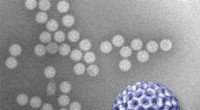
One remarkable feature of soft sphere sedimentation is the formation of "sedimenting crystals." These are structures where the spheres arrange themselves into a crystalline lattice, but the crystal continuously sinks as new spheres are added from above. The growth and structure of sedimenting crystals can vary depending on the softness and interactions of the spheres.
Another intriguing behavior observed in soft sphere sedimentation is the emergence of "density inversions." In these cases, the density of the sedimenting layer decreases as more spheres are added, leading to a lighter layer on top of a denser layer. This phenomenon occurs due to the interplay of gravitational forces and the softness of the spheres, which allows them to rearrange and form more open structures.
Furthermore, soft spheres can also form various other non-crystalline structures, such as gels, glasses, and amorphous aggregates. The specific structure that forms depends on the softness, interactions, and concentration of the spheres. These structures can exhibit unique properties, including elasticity, shear-induced transitions, and sensitivity to external stimuli.
The study of soft sphere sedimentation has implications in diverse fields, including materials science, chemical engineering, and biological physics. Understanding and controlling the self-assembly of soft spheres can enable the design and fabrication of novel materials with tailored properties and functionalities. Additionally, insights gained from soft sphere sedimentation contribute to our understanding of fundamental physical processes in complex systems, such as crystal growth, phase behavior, and the interplay of soft matter and gravity.