Proteins are important biomolecules that control almost all cellular processes. These nanomachines perform their specific tasks at certain positions within the cell membrane, where they fulfil important tasks such as controlling the exchange of substances with the outside world. The proteins produce small amounts of heat when performing these tasks, which can be measured using appropriately small thermometers in the vicinity of the molecules.
"The challenge is that the heat flow rates that occur here are extremely low, which has made such local temperature measurements almost impossible in living cells," explains Jörg Enderlein. With their new measuring process, the researchers succeeded in overcoming this challenge and, for the first time, making a direct measurement of heat production in a cell membrane as it naturally occurs.
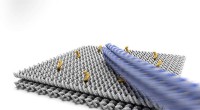
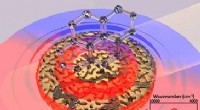
They attached nanoprobes to molecules within the cell membrane. These nanoprobes, just a few billionths of a metre in size, act as miniature thermometers that measure temperature changes using a fluorescent dye. "To visualise these probes, we used super-resolution microscopy," says PhD candidate Christoph Rau, the lead author of the study. This enables the position and temperature fluctuations of the probes to be precisely determined in the cell.
The team of researchers discovered the temperature fluctuates considerably at specific points on the cell membrane with differences even within a few billionths of a metre as a proton pump molecule performs its tasks (a membrane protein transporting protons across the cell membrane). "For the first time, we've achieved the localisation-specific visualisation and quantification of heat dissipation from individual membrane proteins in living cells," explains Rau.
With their highly sensitive measurement methods, the researchers from Halle can measure the temperature in a volume a thousand times smaller than a single cell. One potential benefit of this is the ability to detect very early signs of cancer. "In many cancers, the function of membrane proteins is altered, which leads to changes in the heat production profile in the cell membrane. This makes it conceivable to use nano-thermometry as a basis for a new imaging method for cancer diagnostics in the future," says Jörg Enderlein.