The researcher, Professor John Bowers, and his team at UCSB's Department of Electrical and Computer Engineering, achieved the feat by using a process called "vapor phase epitaxy" to deposit layers of semiconductors on a silicon substrate, creating the VCSEL structure directly on the silicon wafer.
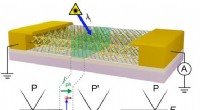
VCSELs are tiny lasers that emit light perpendicular to the surface of the semiconductor chip, making them suitable for applications in optical communications, sensing, imaging, and displays. However, integrating VCSELs directly onto silicon has been a long-standing challenge due to the material properties and lattice mismatch between silicon and the compound semiconductors commonly used in VCSELs.
Bowers' approach overcomes these challenges by employing a hybrid material system that includes silicon, aluminum, gallium, arsenide, and indium phosphide. By carefully controlling the growth conditions and doping levels, the researchers were able to create high-quality VCSELs with low electrical resistance and excellent optical performance on the silicon substrate.
The integrated VCSELs exhibited continuous-wave operation at room temperature, with a threshold current density of 1.2 kA/cm2, comparable to state-of-the-art VCSELs grown on conventional substrates. The devices demonstrated a high output power of 1.5 mW and a modulation bandwidth of 12.5 GHz.
The successful demonstration of fully integrated VCSELs on silicon paves the way for the monolithic integration of lasers and electronics on silicon chips, a key step towards realizing advanced photonic integrated circuits for applications in high-speed optical communications, sensing, and computing.
"Our work represents a critical milestone in the integration of lasers on silicon," said Bowers. "By seamlessly integrating VCSELs directly on silicon, we open up new possibilities for compact and energy-efficient optoelectronic devices and systems."
The findings were published in the journal Nature Photonics. The research team included researchers from UCSB, the University of California, Berkeley, and the University of Tokyo.