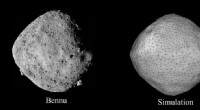
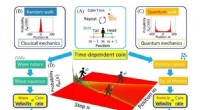
1. Classical Mechanics: Deals with the motion of objects that are large enough to be seen with the naked eye, and at speeds much slower than the speed of light. This branch includes topics like:
* Kinematics: Describing motion using quantities like displacement, velocity, and acceleration.
* Dynamics: Examining the causes of motion, like forces and momentum.
* Energy: Studying different forms of energy and how they are transferred.
* Rotational motion: Understanding how objects spin and rotate.
2. Electromagnetism: Explores the relationship between electricity and magnetism. This includes:
* Electricity: The study of static and moving charges, electric fields, and currents.
* Magnetism: Investigating magnetic fields, magnetic forces, and the interaction of magnetic materials.
* Electromagnetic waves: Examining the nature of light and other electromagnetic radiation.
3. Thermodynamics: Focuses on heat, temperature, and how energy is transferred. Key topics include:
* Heat transfer: Conduction, convection, and radiation.
* Thermodynamics laws: Describing how energy is conserved and how entropy increases in closed systems.
* Statistical mechanics: Linking microscopic properties to macroscopic behavior.
4. Quantum Mechanics: Explores the behavior of matter and energy at the atomic and subatomic level, where classical mechanics breaks down. Key concepts include:
* Wave-particle duality: Light and matter exhibiting both wave-like and particle-like properties.
* Quantum states: Describing the possible energy levels and properties of particles.
* Quantum entanglement: The strange connection between two or more quantum particles.
5. Relativity: Deals with the relationship between space, time, and gravity, particularly at very high speeds or strong gravitational fields. This includes:
* Special relativity: Describing how time and space are relative to the observer's motion.
* General relativity: Explaining gravity as a curvature of spacetime caused by mass and energy.
6. Nuclear Physics: Focuses on the structure, properties, and interactions of atomic nuclei. Key areas include:
* Radioactivity: The spontaneous emission of particles and energy from unstable nuclei.
* Nuclear reactions: Processes that involve the transformation of atomic nuclei.
* Nuclear fission and fusion: The splitting and merging of atomic nuclei, respectively.
It's important to remember that these areas often overlap and interact with each other. Additionally, there are many other specialized fields within physics, such as:
* Astrophysics: The study of celestial objects and phenomena.
* Condensed matter physics: The study of materials in their condensed states (solids and liquids).
* Particle physics: The study of the fundamental particles of matter and their interactions.
* Biophysics: The application of physical principles to biological systems.
Physics is a vast and constantly evolving field, so this list is not exhaustive.