Theoretical Tools:
* Mathematics: Physicists rely heavily on mathematics to express physical laws, develop models, and make predictions. This includes calculus, linear algebra, differential equations, statistics, and more.
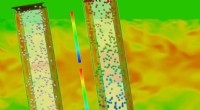
* Computer simulations: Complex physical systems often cannot be solved analytically. Simulations using software like Mathematica, MATLAB, and specialized physics packages allow physicists to explore these systems numerically.
* Theoretical frameworks: These are overarching models that guide research, such as Newtonian mechanics, quantum mechanics, relativity, and various theories in condensed matter physics.
Experimental Tools:
* Particle accelerators: These powerful machines accelerate charged particles to high speeds, allowing physicists to study fundamental particles and forces. Examples include the Large Hadron Collider (LHC) and the Stanford Linear Accelerator Center (SLAC).
* Detectors: These instruments measure the properties of particles, such as their energy, momentum, and charge. Examples include cloud chambers, bubble chambers, scintillators, and calorimeters.
* Microscopes: From optical microscopes to electron microscopes and scanning tunneling microscopes, these tools allow physicists to see the world at various scales.
* Telescopes: Astronomers use telescopes to observe celestial objects and gather data about the universe. These range from ground-based telescopes to space telescopes like the Hubble Space Telescope.
* Lasers: Lasers provide a precise and coherent source of light, used for spectroscopy, interferometry, and other applications.
* Sensors and probes: Various sensors and probes are used to measure physical quantities like temperature, pressure, magnetic fields, and more.
* Specialized equipment: Physicists use a wide array of specialized equipment depending on their field, such as cryogenic systems for studying low-temperature phenomena, vacuum chambers for creating controlled environments, and ultra-high-speed cameras for capturing fleeting events.
Data Analysis Tools:
* Statistical software: Physicists use statistical software to analyze data, determine uncertainties, and draw conclusions from experiments.
* Programming languages: Languages like Python, C++, and Fortran are used to automate data analysis, control experiments, and develop simulations.
Beyond the tools:
* Collaboration: Physics is often a collaborative field, with researchers working together to solve complex problems.
* Communication: Physicists communicate their findings through presentations, publications, and conferences.
* Critical thinking: Physicists constantly question assumptions, analyze results, and seek new explanations.
This list is not exhaustive, but it highlights the diverse and powerful tools that physicists use to unravel the mysteries of the universe.