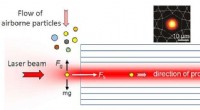
Here's a breakdown:
* Direction: Movement is purely left-right or right-left, with no upward or downward component.
* Gravity: Gravity acts downwards, and its influence on horizontal motion is usually negligible, especially over short distances. However, gravity can still influence horizontal motion indirectly. For example, if an object is launched horizontally, gravity will cause it to fall towards the ground.
* Examples:
* A car driving on a straight road
* A ball rolling across a table
* A plane flying at a constant altitude
* A projectile launched horizontally (ignoring air resistance)
Important Considerations:
* Air Resistance: In real-world scenarios, air resistance can affect horizontal motion. It's a force opposing the movement and can slow down objects, especially those with a large surface area.
* Circular Motion: Horizontal motion doesn't necessarily mean movement in a straight line. Objects can move horizontally in circles or other curved paths.
Key Concepts:
* Displacement: The change in position of an object in the horizontal direction.
* Velocity: The rate of change of displacement, including both speed and direction.
* Acceleration: The rate of change of velocity. In pure horizontal motion without air resistance, the horizontal acceleration is usually zero, meaning the object moves at a constant speed.
Understanding horizontal motion is crucial for understanding projectile motion, where objects move both horizontally and vertically under the influence of gravity. It's also essential for understanding many other physical phenomena, such as the motion of planets and stars.