Newton's Laws of Motion Explain It All
* Newton's First Law (Inertia): An object at rest stays at rest, and an object in motion stays in motion with the same speed and in the same direction *unless acted upon by an unbalanced force*. Think of a book on a table - it stays put until you push it (apply a force).
* Newton's Second Law (Force = Mass x Acceleration): This is where the magic happens! A force causes an object to accelerate. Acceleration means a change in speed or direction. The bigger the force, the greater the acceleration (and vice versa). The heavier an object (more mass), the less it will accelerate for a given force.
* Newton's Third Law (Action-Reaction): Every action has an equal and opposite reaction. When you jump up, your feet push down on the ground (action), and the ground pushes back up on your feet (reaction), propelling you upwards.
Examples of Forces Creating Motion
* Pushing a shopping cart: You apply a force to the cart, causing it to accelerate and move.
* Throwing a ball: Your hand applies a force to the ball, causing it to fly through the air.
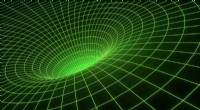
* Gravity: The Earth's gravitational force pulls objects towards its center, causing things to fall.
* Friction: Friction is a force that opposes motion. When you rub your hands together, the friction creates heat.
* Magnetic forces: Magnets create forces that can attract or repel objects, causing them to move.
* Electrostatic forces: These forces result from the interactions of charged particles and can cause objects to attract or repel each other.
Important Note: Forces can also stop or change the direction of motion. Imagine a car braking - the brakes apply a force that slows the car down.
Let me know if you want to explore any specific force or example in more detail!