Key Properties of Liquids:
* Definite Volume, Indefinite Shape: Liquids have a fixed volume, meaning they occupy a specific amount of space. However, they lack a definite shape and take the shape of their container.
* High Density: Liquids are generally denser than gases, meaning their molecules are more closely packed together.
* Fluidity: Liquids can flow and change shape easily due to the relatively weak bonds between their molecules. This allows them to adapt to the shape of their container.
* Compressibility: Liquids are only slightly compressible, meaning their volume changes very little under pressure.
* Surface Tension: Liquids exhibit surface tension, a force that causes the surface of a liquid to contract and behave like an elastic sheet. This is due to the cohesive forces between liquid molecules.
* Viscosity: Liquids resist flow, a property called viscosity. Higher viscosity liquids like honey flow more slowly than lower viscosity liquids like water.
How Liquids Differ from Other States of Matter:
* Solids: Solids have a fixed shape and volume due to the strong bonds between their molecules. They are not fluid.
* Gases: Gases have no fixed shape or volume, and their molecules are much more spread out than in liquids. They are highly compressible.
* Plasma: Plasma is a superheated state of matter where atoms are stripped of their electrons, creating a charged, ionized gas. It exhibits different properties from liquids.
Molecular Behavior:
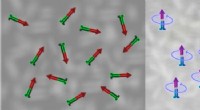
The defining characteristics of liquids arise from the way their molecules interact. Liquid molecules are close together, but they are able to move past each other. This allows them to flow and take the shape of their container, but also prevents them from expanding infinitely like gases.
Examples of Liquids:
* Water
* Oil
* Mercury
* Blood
* Gasoline
Note: The term "liquid" is often used loosely in everyday language. For example, we might refer to "liquid nitrogen," but it's actually a very cold gas, not a true liquid. In physics, the term "liquid" has a very specific meaning based on the properties described above.