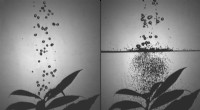
* Inertia: The Resistance to Change Inertia is the tendency of an object to resist changes in its motion. This means that an object at rest wants to stay at rest, and an object in motion wants to stay in motion at a constant speed and direction.
* Friction: The Force Opposing Motion Friction is a force that opposes the relative motion between two surfaces in contact. It's what makes it hard to slide a book across a table or to push a heavy box.
The Relationship:
* Inertia Makes Stopping Difficult: When you apply a force to stop a moving object, the object's inertia resists this change. This resistance is what makes it difficult to stop a moving object.
* Friction is the Force That Stops: Friction acts as the force that opposes the motion, ultimately causing the object to slow down. The more friction there is, the more quickly the object will stop.
Example:
Imagine a car speeding down the road. The car has a lot of kinetic energy due to its motion. When the driver applies the brakes, the car's inertia wants to keep it moving. The brake pads press against the wheels, creating friction. This friction converts the car's kinetic energy into heat, eventually bringing the car to a stop.
Key Points:
* The greater an object's mass, the greater its inertia, making it harder to stop.
* The greater the friction between two surfaces, the faster an object will slow down.
* Inertia and friction work together to bring moving objects to rest.
In essence, inertia is the force that wants to keep an object in motion, while friction is the force that acts against this motion, ultimately bringing the object to rest.