1. Matter is made of particles in constant motion:
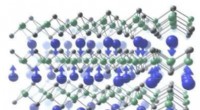
* Solids: Particles are tightly packed and vibrate in fixed positions.
* Liquids: Particles are more loosely packed and can move around each other.
* Gases: Particles are widely spaced and move rapidly and randomly.
2. Heat is the transfer of energy:
* Heat is the transfer of energy between objects at different temperatures.
* This energy transfer is due to the kinetic energy of the particles within the objects.
3. How heat transfer works based on particle motion:
* Conduction: Heat transfer through direct contact. Faster-moving particles in a hot object collide with slower-moving particles in a cooler object, transferring energy and increasing the kinetic energy of the cooler object's particles. This leads to an increase in temperature.
* Convection: Heat transfer through the movement of fluids (liquids or gases). Warmer, less dense fluid rises, while cooler, denser fluid sinks. This creates currents that transfer heat energy.
* Radiation: Heat transfer through electromagnetic waves. All objects emit electromagnetic radiation, and the amount of radiation increases with temperature. When these waves strike another object, they transfer energy and can increase the temperature of the object.
Key Points:
* Higher temperature = higher kinetic energy: The faster the particles are moving, the higher the temperature.
* Heat transfer is about energy transfer: Heat transfer is not the transfer of particles, but the transfer of energy between them.
* Particle theory explains how heat moves: The movement and collisions of particles at the microscopic level drive the heat transfer processes we observe at the macroscopic level.
In Summary: The particle theory of matter provides a foundational understanding of how heat energy is transferred. The constant motion and collisions of particles within matter drive the mechanisms of conduction, convection, and radiation, ultimately leading to changes in temperature.