1. Understanding Wave Cycles:
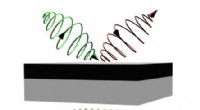
* A wave cycle is one complete oscillation, from the starting point to the peak, through the trough, and back to the starting point.
2. Measuring Frequency:
* Units: The standard unit of frequency is Hertz (Hz). One Hertz represents one wave cycle per second.
* Method:
* Choose a fixed point in the path of the wave.
* Count the number of wave cycles that pass that point in a specified time interval (usually one second).
* The number of cycles per second is the frequency.
Example:
* If 10 wave cycles pass a fixed point in 2 seconds, the frequency is 10 cycles / 2 seconds = 5 Hz.
Instruments for Measuring Frequency:
* Oscilloscope: This device displays a visual representation of the wave, allowing you to count cycles over a given time.
* Frequency Counter: This instrument directly measures the frequency and displays it numerically.
Important Note: Frequency is related to the period of a wave, which is the time it takes for one complete cycle. The relationship is:
* Frequency (f) = 1 / Period (T)