Early Observations and Theories:
* Ancient civilizations: Made crucial observations of the natural world, laying the groundwork for later scientific discoveries. For instance, Egyptians understood basic astronomy, while the Greeks developed geometry and early ideas about the cosmos.
* The Renaissance and Scientific Revolution: This period saw a shift towards systematic observation and experimentation. Thinkers like Copernicus, Galileo, and Newton revolutionized our understanding of motion, gravity, and the solar system.
From Classical to Modern Physics:
* 19th Century: The Industrial Revolution spurred advancements in thermodynamics, electricity, magnetism, and optics. Key figures include Faraday, Maxwell, and Boltzmann.
* 20th Century: A radical shift with the advent of relativity and quantum mechanics. Einstein, Bohr, Heisenberg, and others changed our understanding of space, time, energy, and matter at the atomic level.
Key Ways Humankind Shaped Physics:
* Asking Questions and Seeking Explanations: This is the fundamental driver of scientific progress. Humankind's innate curiosity has driven us to explore the universe and its workings.
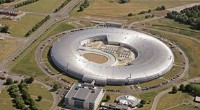
* Developing Tools and Techniques: Microscopes, telescopes, accelerators, and computers have enabled us to observe the world in ever greater detail and conduct complex experiments.
* Building on the Work of Others: Scientific progress is collaborative. Each generation builds upon the discoveries of previous ones, refining and expanding our knowledge.
* Applying Physics to Solve Problems: Physics has played a critical role in technological advancements, from electricity and communication to medicine and energy production.
Looking to the Future:
* Continuing to Explore the Unknown: We still have much to learn about the universe, from the nature of dark matter and dark energy to the fundamental forces that govern reality.
* Developing New Tools and Technologies: Future breakthroughs may involve fields like quantum computing, artificial intelligence, and materials science.
* Addressing Global Challenges: Physics is crucial for tackling climate change, resource scarcity, and other urgent issues facing humanity.
In essence, humankind's insatiable curiosity, ingenuity, and collaborative spirit have been the driving forces behind the extraordinary progress in physics throughout history. And the journey is far from over!