Diffraction: What's Happening
* Waves encounter a barrier: Imagine water waves hitting a barrier like a breakwater.
* Waves "spill" around: Instead of stopping abruptly, the waves bend around the edges of the barrier.
* Wavefront spreads: If the opening in the barrier is smaller than the wavelength of the wave, the waves spread out in a circular pattern as they pass through.
Key Points about Diffraction
* The amount of bending depends on the wavelength: Shorter wavelengths diffract less, while longer wavelengths diffract more. This is why light waves diffract more than sound waves.
* Diffraction is most noticeable when the size of the opening or obstacle is comparable to the wavelength: If the opening is much larger than the wavelength, the bending effect is less pronounced.
* Diffraction can occur with all types of waves: Light, sound, water waves, and even matter waves exhibit diffraction.
Examples of Diffraction
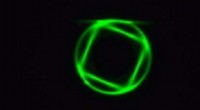
* Light passing through a narrow slit: This creates a diffraction pattern of light and dark bands on a screen behind the slit.
* Sound waves bending around a corner: This is why you can hear someone talking even if they are hidden behind a wall.
* X-ray diffraction: This technique is used to study the structure of crystals and molecules by analyzing the diffraction pattern of X-rays passing through them.
Let me know if you'd like to explore any of these examples in more detail!