Here's a breakdown:
* Diffraction: The spreading out of waves as they pass through an opening or around an obstacle. This phenomenon is a result of the wave's tendency to bend around corners.
* Edge: This refers to the boundary or sharp change in the object that the wave is encountering.
* Object: The object that the wave is interacting with, causing the bending or diffraction.
Example:
Imagine a wave traveling towards a narrow opening. As the wave passes through the opening, it spreads out and bends around the edges of the opening. This is diffraction. The smaller the opening compared to the wavelength of the wave, the more pronounced the diffraction effect will be.
Applications of Diffraction:
Diffraction is a fundamental principle in physics with many practical applications, including:
* Holography: Creating three-dimensional images using interference patterns.
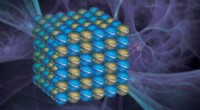
* X-ray diffraction: Analyzing the structure of crystals.
* Microscopy: Improving the resolution of microscopes.
* Radio telescopes: Collecting and focusing radio waves from distant objects.