Understanding Velocity
* Velocity is a vector quantity, meaning it has both magnitude (speed) and direction.
* Instantaneous velocity is the velocity of an object at a specific point in time. This is different from average velocity, which is the overall displacement over a period of time.
Methods to Find Instantaneous Velocity
1. Using Calculus (Derivatives):
* If you have a position function: If you know the position of an object as a function of time (often denoted as `s(t)`), you can find the instantaneous velocity by taking the derivative of the position function with respect to time:
```
v(t) = ds(t)/dt
```
* Example: If the position function is `s(t) = t^2 + 3t`, then the velocity function is `v(t) = 2t + 3`.
2. Using a Velocity-Time Graph:
* If you have a graph of velocity vs. time: The instantaneous velocity at any specific time is simply the value of the velocity at that time on the graph.
3. Experimental Measurement (Using Sensors):
* Direct Measurement: Some devices, like radar guns, can directly measure the instantaneous velocity of an object.
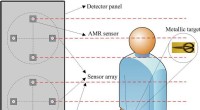
* Motion Sensors: In physics experiments, motion sensors can be used to track an object's position over time, and the velocity can be calculated using software.
Example
Let's say a car's position function is `s(t) = t^2 + 2t` (where 't' is in seconds and 's' is in meters). To find the instantaneous velocity at `t = 3 seconds`:
1. Find the velocity function: `v(t) = ds(t)/dt = 2t + 2`
2. Substitute the time (t = 3 seconds): `v(3) = (2 * 3) + 2 = 8 m/s`
Therefore, the instantaneous velocity of the car at 3 seconds is 8 meters per second.
Key Points to Remember:
* Velocity is instantaneous: It changes constantly, especially if an object is accelerating.
* Direction is crucial: Velocity is a vector, so it includes both speed and direction.
* Units matter: Velocity is typically measured in units like meters per second (m/s) or kilometers per hour (km/h).