Einstein's contribution was in explaining the photoelectric effect in 1905 using his groundbreaking theory of light quanta, which we now call photons. He proposed that light behaves as both a wave and a particle.
Here's a breakdown:
* Discovery: Hertz observed the phenomenon while studying radio waves. He noticed that electrons were emitted from metal surfaces when exposed to ultraviolet light.
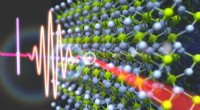
* Explanation: Einstein, using his understanding of quantum mechanics, explained this by suggesting that light is not just a wave, but also consists of discrete packets of energy called photons. When a photon hits a metal, it transfers its energy to an electron, which can then escape from the metal.
So, while Hertz discovered the effect, Einstein provided a theoretical understanding of it, which revolutionized our understanding of light and helped pave the way for the development of quantum mechanics.