Understanding Refraction
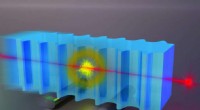
* Refraction is the bending of light as it passes from one medium to another. This bending occurs because light travels at different speeds in different mediums.
* Speed of light: Light travels faster in rarer mediums (like air) and slower in denser mediums (like water or glass).
The Perpendicular Case
* When a light ray enters a denser medium perpendicularly, the angle of incidence is 0 degrees.
* Angle of incidence: The angle between the incoming light ray and the normal (a line perpendicular to the surface) is called the angle of incidence.
* Angle of refraction: The angle between the refracted (bent) light ray and the normal is called the angle of refraction.
* Snell's Law: Snell's Law describes the relationship between the angles of incidence and refraction, and the indices of refraction of the two mediums:
* n1 * sin(θ1) = n2 * sin(θ2)
* Where n1 and n2 are the refractive indices of the first and second medium, respectively.
* θ1 is the angle of incidence, and θ2 is the angle of refraction.
Applying Snell's Law
* When the angle of incidence is 0 degrees, sin(θ1) = sin(0) = 0.
* Therefore, according to Snell's Law, the angle of refraction (θ2) must also be 0 degrees.
* This means the light ray doesn't bend – it continues straight through the denser medium.
In simpler terms: When light enters a denser medium perpendicularly, it slows down but doesn't change direction because the speed change is uniform across the entire wavefront. There's no reason for one part of the wavefront to slow down more than another, so it passes straight through.