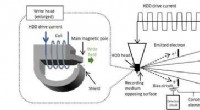
Magnetic Force:
* Nature: Arises from the interaction of magnetic dipoles.
* Source: Moving electric charges or intrinsic magnetic moments of particles like electrons.
* Characteristics:
* Can be attractive or repulsive depending on the orientation of the dipoles.
* Acts over a longer range than dispersion forces.
* Plays a crucial role in phenomena like magnetism, electric motors, and magnetic resonance imaging (MRI).
Dispersion Forces (London Dispersion Forces):
* Nature: Temporary, weak attractive forces that arise due to fluctuations in electron distribution within molecules.
* Source: Instantaneous dipoles formed due to temporary imbalances in electron clouds.
* Characteristics:
* Always attractive.
* Act over a very short range (only when molecules are very close).
* Important for the condensation of gases, the properties of liquids, and the interaction of nonpolar molecules.
Key Differences:
* Origin: Magnetic forces originate from moving charges or intrinsic magnetic moments, while dispersion forces originate from temporary fluctuations in electron distribution.
* Range: Magnetic forces can act over longer distances, while dispersion forces are very short-range.
* Nature of Attraction/Repulsion: Magnetic forces can be attractive or repulsive, while dispersion forces are always attractive.
In summary, magnetic forces are based on magnetic dipoles and their interactions, while dispersion forces are temporary, weak attractions arising from fluctuations in electron clouds.