* Confinement: Quarks are never found in isolation. They are always bound together by the strong force to form composite particles like protons and neutrons.
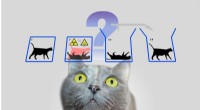
* Quantum Uncertainty: The Heisenberg Uncertainty Principle dictates that we cannot know both the position and momentum (which includes speed) of a particle with perfect accuracy. The smaller the particle, the more significant this uncertainty becomes.
What we can say:
* Inside Hadrons: Quarks move at speeds close to the speed of light *inside* hadrons (protons, neutrons, etc.). This is because they are constantly interacting with the strong force, exchanging gluons (force carriers).
* No Independent Speed: It's not meaningful to talk about the speed of a quark outside of a hadron. It's like trying to talk about the speed of a single letter in a word – it's meaningless without the context of the entire word.
Think of it this way: Imagine a swarm of bees buzzing around a hive. You can talk about the speed of the entire swarm, but it's much harder to pinpoint the speed of any individual bee within the swarm. Quarks are similar – they are constantly moving and interacting within their confined environment.