Understanding the Relationship
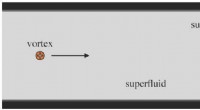
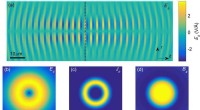
* Waves need a medium: Waves are disturbances that transfer energy. Most waves require a medium (like air, water, or a solid) to travel.
* Medium properties matter: The properties of the medium, such as density, elasticity, and temperature, dictate how quickly the wave's energy can be transferred.
Examples
* Sound waves: Sound waves travel through air, water, and solids.
* Air: Sound travels slower in air because air molecules are less tightly packed, resulting in slower energy transfer.
* Water: Sound travels faster in water because molecules are closer together.
* Solids: Sound travels fastest in solids because the molecules are very tightly packed, allowing for very efficient energy transfer.
* Light waves: Light waves are electromagnetic waves and do not require a medium to travel. They travel fastest in a vacuum (the speed of light, c).
* Air: Light travels slightly slower in air than in a vacuum.
* Water: Light slows down further in water than in air.
* Glass: Light slows down even more in glass, leading to refraction (bending of light).
Specific Factors
* Density: Denser media generally slow down waves. This is because the particles are closer together, leading to more collisions and energy transfer.
* Elasticity: More elastic media allow waves to travel faster. Elasticity refers to a material's ability to deform and return to its original shape.
* Temperature: In some cases, temperature affects wave speed. For example, sound travels faster in warmer air because the molecules are moving faster and collide more frequently.
Exceptions
* Electromagnetic waves (like light): These waves do not require a medium and travel at the speed of light in a vacuum. However, their speed can be affected by the medium they are passing through, as described above.
Key Takeaway
The speed of a wave is directly related to the properties of the medium it travels through. Understanding these relationships helps us predict how waves will behave in different environments.