Linear Acceleration
* A car speeding up: When you press the gas pedal in a car, the car's velocity increases, meaning it's accelerating.
* A ball falling from a height: Gravity pulls the ball downwards, causing its speed to increase as it falls, resulting in acceleration.
* A rocket launching: Rockets experience tremendous acceleration as they fire their engines, increasing their velocity to escape Earth's gravity.
* A train slowing down at a station: The train's velocity decreases, so it is undergoing deceleration (negative acceleration).
Circular Acceleration
* A car turning a corner: Even if the car maintains a constant speed, it's accelerating because its direction is changing. This is called centripetal acceleration.
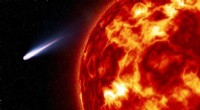
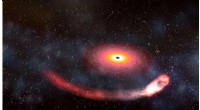
* A planet orbiting the Sun: Planets are constantly accelerating towards the Sun due to its gravitational pull, even though their orbital speed might be relatively constant.
* A roller coaster on a loop: The roller coaster experiences a constant change in direction as it travels through the loop, resulting in centripetal acceleration.
Other Examples
* The expansion of the universe: The space between galaxies is expanding at an accelerating rate, causing the universe to grow larger over time.
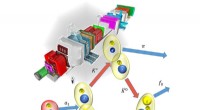
* An electron accelerating in an electric field: Charged particles like electrons experience acceleration when they are in an electric field, changing their velocity and direction.
Important Note: Acceleration is a vector quantity, meaning it has both magnitude (how much) and direction. A change in speed or direction, or both, constitutes acceleration.