1. Reflection:
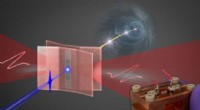
* Some of the light will be reflected off the surface of the glass block. This is known as specular reflection, where the angle of incidence (the angle at which the light hits the surface) is equal to the angle of reflection.
* The amount of light reflected depends on the angle of incidence and the refractive index of the glass. A higher refractive index means more light will be reflected.
2. Refraction:
* Some of the light will pass through the glass block. This is known as refraction, and the light ray will bend as it enters the glass.
* The amount of bending depends on the angle of incidence and the refractive index of the glass. Light bends more when entering a material with a higher refractive index.
* The light ray will also bend again as it exits the glass block. This bending is in the opposite direction to the first bending.
3. Absorption:
* A small amount of light energy may be absorbed by the glass block. This absorption is usually minimal for clear glass, but can be significant for colored glass or opaque materials.
Here's a breakdown of what happens to the light ray as it interacts with the glass block:
* Before entering the glass: The ray travels in a straight line through air.
* Upon entering the glass: The ray bends towards the normal (a line perpendicular to the surface).
* Inside the glass: The ray continues to travel in a straight line.
* Upon exiting the glass: The ray bends away from the normal.
* After exiting the glass: The ray continues in a straight line, but is now offset from its original path.
Key Concepts:
* Refractive index: A measure of how much light bends when passing from one medium to another. Glass has a higher refractive index than air.
* Angle of incidence: The angle between the incident ray and the normal.
* Angle of refraction: The angle between the refracted ray and the normal.
* Snell's Law: A mathematical formula that relates the angle of incidence, the angle of refraction, and the refractive indices of the two media.
The specific behavior of the light ray will depend on the angle of incidence and the type of glass.